


.png)
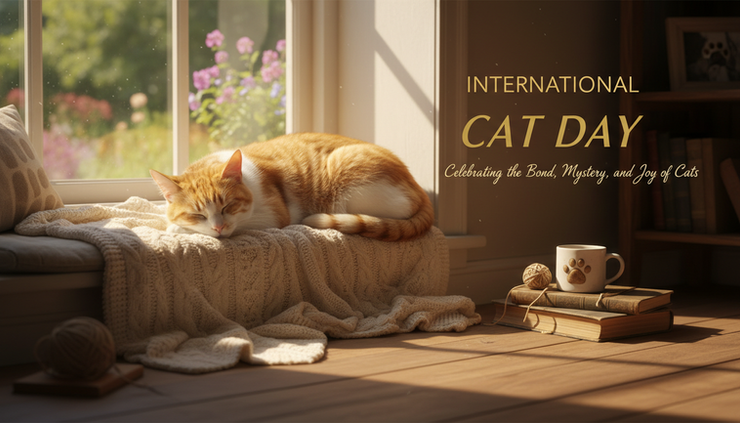
International Cat Day Celebrating the Bond, Mystery, and Joy of Cats
A cat can turn an ordinary room into a kingdom just by walking into it. One quiet leap onto the sofa, one slow blink from across the room, one paw tucked under a chin, and the whole mood changes.
That is the magic International Cat Day celebrates. Cats are funny, elegant, stubborn, affectionate, mysterious, and deeply individual. They share our homes, sleep in our sunbeams, supervise our routines, and somehow convince us that 5:00 a.m. is a perfectly fair breakfast time.
They are also more than pets. For many people, cats are steady companions through long workdays, big life changes, quiet evenings, and ordinary moments that feel better with a purring friend nearby. Their bond with humans is built on trust, patience, and choice, which makes it feel especially rewarding.
Cats choose connection in their own wonderful way
Dogs are often praised for their open enthusiasm, but cats bring something different to companionship. They tend to make affection feel earned. A cat may watch from a doorway for weeks before curling up beside someone. They may accept a gentle head scratch one day and reject it the next. They may follow from room to room, then pretend it was their idea to be there all along.
That independence is part of the appeal.
A cat’s love often shows up in subtle signs:
A slow blink from across the room
A tail held high when they walk toward someone
A soft head bump against a leg or hand
Kneading a blanket, sweater, or lap
Sleeping nearby, even if not directly on someone
Bringing a toy into the room as if presenting treasure
These behaviours may seem small, but they point to something meaningful. Cats form social bonds, and they often show trust by staying close, relaxing their body, and choosing repeated contact. A cat that naps near someone is sharing one of its most vulnerable states. A cat that rolls onto its side is saying, in its own language, “I feel safe here.”
The bond grows stronger when people respect a cat’s signals. Cats usually prefer consent-based affection. They appreciate calm voices, predictable routines, and the freedom to step away when they want space. When that respect becomes part of daily life, many cats become more affectionate, playful, and confident.
The best cat relationships are not based on control. They are based on trust.
Cats have been wrapped in mystery since ancient Egypt
Cats have carried an air of mystery for thousands of years. In ancient Egypt, they were admired, protected, and closely connected with home, fertility, grace, and divine power. The goddess Bastet, often shown as a lioness or as a woman with the head of a cat, became one of the most recognizable symbols of feline reverence.
Part of that admiration had practical roots. Cats helped protect grain stores by hunting rodents, which made them valuable in a society that depended heavily on stored food. Over time, their usefulness blended with symbolism. Their quiet movement, night vision, sharp instincts, and watchful presence made them seem almost supernatural.
It is easy to understand why.
A cat can sit perfectly still and appear to know something no one else knows. It can vanish into a house, then reappear on a high shelf with no clear route. It can stare into a blank corner with complete seriousness, as if listening to a message from another world. Even the sound of purring feels a little mysterious, both physical and emotional at once.
Ancient cultures saw cats as protectors and symbols of power. Modern cat lovers may not worship them as sacred beings, though some cats seem to expect it, but the sense of wonder remains. A cat in the home still feels like a little guardian of thresholds, windows, dreams, and shadows.

Their strong personalities are the heart of their charm
No two cats are exactly alike. That may be the clearest reason people love them so much.
One cat may be a fearless greeter who runs to the door whenever someone visits. Another may hide under the bed until the room feels safe. One may love belly rubs, while another treats a hand near the stomach as a grave insult. Some cats chatter at birds. Some play fetch. Some supervise showers. Some sit on books, laptops, or clean laundry with the confidence of a tiny monarch.
These personalities can be bold, gentle, mischievous, shy, dramatic, or deeply affectionate. Many cats seem to develop habits that belong only to them, such as drinking from a specific cup, sleeping in a cardboard box instead of an expensive bed, or announcing every trip to the litter box like breaking news.
Their preferences matter. A cat-friendly home starts with noticing what a specific cat enjoys rather than assuming every cat wants the same thing.
Some cats are social butterflies
These cats want to be near the action. They may sit in the middle of the room, follow guests, or climb onto laps as soon as someone sits down. They often enjoy interactive play, food puzzles, and perches where they can watch everything.
Some cats are quiet observers
A more cautious cat may prefer high shelves, covered beds, or peaceful corners. This does not mean the cat is unfriendly. It may simply need more time and more choice. For these cats, respect builds confidence.
Some cats are born comedians
There is always one cat who will dive into a paper bag, knock a pen off a table with full eye contact, or sprint down the hallway for no visible reason. Playful cats need safe outlets for their energy, especially indoors.
Some cats are gentle shadows
These cats do not demand attention loudly. They simply appear nearby. They rest at the foot of the bed, sit beside the chair, or curl up just close enough to touch. Their love is soft, steady, and easy to miss unless someone pays attention.
Strong personalities make cats memorable. Their quirks become part of the family story.
A cat-friendly home supports comfort, play, and choice
Cats experience the home in layers. They care about warmth, height, hiding places, texture, scent, routine, and movement. A good cat-friendly space does not need to be expensive or complicated. It needs to give a cat options.
Cats sleep a lot, and they often rotate between favorite spots. A cozy bed can help, but many cats enjoy variety.
Good resting options include:
A soft bed in a quiet corner
A covered cave-style bed for privacy
A washable blanket on a chair or sofa
A box with a towel inside
A high perch where the cat can relax above the room
A warm spot away from drafts
Place beds where the cat already likes to rest. If a cat keeps choosing the same chair, windowsill, or corner of the hallway, that location may matter more than the bed itself.
Add fun accessories that match natural instincts
Cats need to scratch, stalk, pounce, climb, and explore. Accessories should support those instincts in safe ways.
Helpful choices include:
Scratching posts made from sisal, cardboard, or carpet
Wand toys for supervised play
Soft toys for batting and carrying
Puzzle feeders that make snacks more engaging
Cat trees or shelves for climbing
Tunnels and paper bags for hiding and play
Scratching is not bad behavior. It helps cats stretch, mark territory, and care for their claws. Place scratchers near sleeping areas, doorways, or furniture the cat already targets. A scratcher hidden in a corner may not be as appealing as the arm of the sofa in the center of daily life.
Save the sunny spots
Sunlight is one of life’s great cat luxuries. If there is a window that catches morning or afternoon sun, make it comfortable. Add a blanket, window perch, or nearby cat tree. Make sure windows are secure and screens are sturdy.
A sunlit lounging spot offers more than warmth. It gives a cat entertainment. Birds, leaves, passing cars, squirrels, and shifting shadows can all become part of the day’s viewing schedule.

Make food, water, and litter feel safe
A comfortable environment also includes the basics. Cats often prefer resources that are easy to reach and not crowded together.
Simple improvements can help:
Keep food and water bowls away from the litter box.
Try a wide, shallow bowl if a cat dislikes whiskers touching the sides.
Place water in more than one location if possible.
Scoop the litter box often.
Give each cat enough space if there are multiple cats in the home.
Keep loud appliances away from resting and litter areas when practical.
Small details can reduce stress. A cat that feels secure is more likely to play, explore, and seek affection.
International Cat Day is a reminder to slow down and notice them
International Cat Day is a lovely excuse to celebrate, but cats deserve attention beyond a single date. The day can still serve as a prompt to pause and see the feline companions who share daily life.
Spend extra time doing what a cat actually enjoys. For one cat, that may mean a long wand toy session. For another, it may mean sitting quietly together near a window. Some cats want treats. Some want brushing. Some want the joy of chasing a crinkly ball across the kitchen. Some want the box a gift came in more than the gift itself.
A meaningful celebration can be simple:
Refresh a favourite blanket.
Set up a sunny windowsill perch.
Offer a new scratcher or toy.
Take a few photos during a relaxed moment.
Give a senior cat a softer resting place.
Donate food, blankets, or supplies to a local shelter.
Spend unhurried time with a cat, with the phone set aside.
The best tribute is not always grand. Often, it is attention.
Cats notice routines. They learn footsteps, voices, feeding times, and moods. They know which lap is warmest and which cabinet holds the treats. They may not always come when called, but they are paying attention in their own quiet, clever way.
Photos and stories help honor the cats who shape our lives
Every cat comes with stories.
There is the kitten who climbed the curtains on the first day home. The dignified senior cat who claimed one armchair and ruled from it for years. The former stray who slowly learned to sleep with both eyes closed. The tuxedo cat who stole socks. The calico who refused every bed except a laundry basket. The gray cat who sat beside someone through grief without needing to understand the details.
These stories matter because they show how personal the human-cat bond becomes. Cats weave themselves into daily life through repetition. A paw tap at breakfast. A chirp at the window. A warm weight at the foot of the bed. A quiet presence during a hard day.

Taking photos can help capture those memories, but the best cat photos usually come from patience. Let the cat be comfortable. Use natural light. Photograph familiar behaviours, such as napping in a favourite spot, watching birds, stretching after sleep, or playing with a beloved toy.
Personal stories add even more heart. A funny habit, a rescue journey, a favorite sleeping pose, or a moment of comfort can remind others why cats mean so much. Sharing those stories and photos can also build community among people who understand the joy of being chosen by a cat.
Celebrate the mystery, respect the personality, and cherish the bond
Cats are loving companions, ancient symbols, household comedians, quiet healers, and sunbeam experts. They bring mystery without trying, comfort without speeches, and personality without apology.
International Cat Day is a chance to honor all of that. Celebrate the cat who sleeps beside you, the cat who watches from across the room, the cat who meows like it pays rent, or the cat who needs time before trust. Make the home softer, brighter, safer, and more playful. Notice the slow blinks. Treasure the tiny routines.
Most of all, appreciate the rare gift of a creature that chooses closeness on its own terms. When a cat curls up nearby, rests a paw on your hand, or meets your eyes with that calm, knowing look, it is offering something simple and extraordinary: trust.


Comments